Today’s kids are growing up in a digital world. They play games, watch videos, chat with friends, and explore social media, often before they reach middle school. While the internet offers incredible opportunities, it also creates new risks that every parent should understand.
Today’s online predators aren’t waiting until children become teenagers. Many begin targeting kids as young as 9 or 10 years old through familiar apps, online games, and social platforms. The National Center for Missing & Exploited Children (NCMEC) receives millions of CyberTipline reports each year, highlighting the growing threat of online child exploitation. That makes online safety education more important than ever. The good news is that education is one of the most effective ways to protect children.
Where Predators Lurk
Predators rarely use suspicious websites. Instead, they go where kids already spend their time. Some of the most common places include:
- Online multiplayer games (Roblox, Fortnite, Minecraft, Call of Duty, Among Us)
- Social media platforms (Instagram, TikTok, Snapchat, Facebook, X
- Messaging apps (Discord, WhatsApp, Facebook Messenger, Telegram, Signal)
- Live streaming services (Twitch, YouTube Live, TikTok LIVE, Kick)
- Group chats (iMessage, Discord servers, WhatsApp groups, Snapchat group chats)
- Apps that allow users to connect with strangers (Wizz, Yubo, OmeTV, Monkey,Chatroulette)
Many children don’t realize they may be talking to an adult pretending to be someone their own age.
How Predators Gain Trust
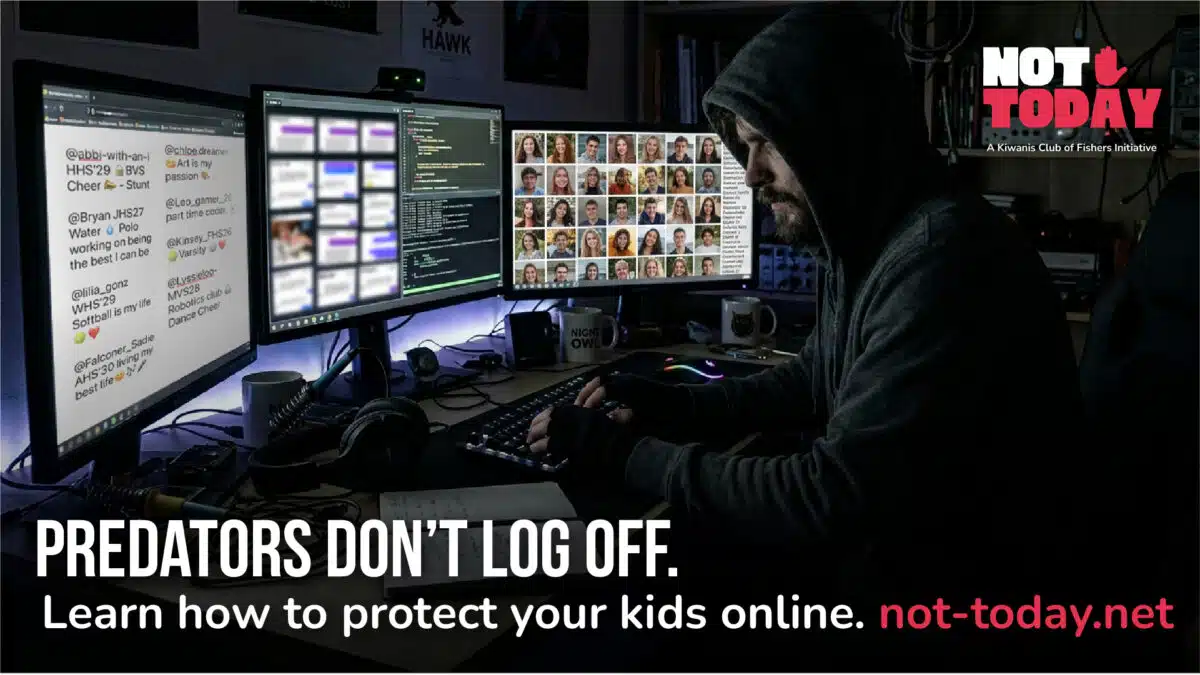
Online grooming usually doesn’t happen overnight. It often starts with what seems like an innocent conversation. Predators may:
- Pretend to be another child
- Compliment a child’s appearance or talents.
- Offer gaming currency, gifts, or rewards.
- Ask about hobbies, family, or school.
- Use a nickname that they’ve seen someone else use.
- Encourage conversations to move to private messaging apps.
- Tell children to keep their friendship a secret.
- Slowly introduce inappropriate conversations or requests.
Their goal is to build trust before asking for personal information, photos, videos, or even arranging an in-person meeting.
Red Flags Parents Should Watch For
Every child is different, but some behaviors deserve a closer look. Watch for:
- Becoming unusually secretive about phones or tablets
- Quickly closing screens when someone walks into the room
- Receiving gifts, money, or game credits from someone they met online
- Spending excessive time talking with someone they have never met
- Becoming anxious, withdrawn, or upset after being online
- Refusing to discuss who they are communicating with
These signs do not automatically mean something is wrong. They are reminders to start calm, open conversations with your child.

Prevention Starts at Home
You do not have to know every app or every gaming platform to help keep your child safe. Simple habits can make a big difference:
- Keep conversations about online safety ongoing, not just one time.
- Know which apps and games your child uses.
- Set privacy and parental controls when appropriate.
- Encourage children to tell a trusted adult if anyone makes them uncomfortable online.
- Remind them that they will never be in trouble for asking for help.
The goal is to build trust so children feel comfortable speaking up before a situation becomes dangerous.
A Local Mission Making a Difference
The heartbreaking story of Fishers teenager Hailey Buzbee reminded our community that online dangers can have real-life consequences. In response, the Kiwanis Club of Fishers created Not-Today.net to help educate families and prevent similar tragedies from happening to other children.
Not-Today.net provides free educational resources, community presentations, and practical online safety information that parents, grandparents, educators, and children can use together. The mission is simple: Give families the knowledge and confidence to recognize warning signs before they become life-changing situations.
Awareness is one of the strongest tools we have. Every conversation, every lesson, and every informed parent helps create a safer online world for children. Learn more, access free resources, and help protect the children in your life by visiting Not-Today.net.