Have you seen a child’s eyes light up when a song is played? Or a toddler shake their little body to a joyful song? Music moves us, and that starts at a young age. Music makes an impact, even in utero. Music brings joy to not only the listeners, but also the musicians. And the good news is that there are lots of ways to get your child involved in music.
When to Get Started
One of the things to consider when choosing an instrument is not only what your child enjoys, but also where they are developmentally. Between the ages of 3 and 5, the focus isn’t on complex technique. Instead, it’s on learning the basics, such as rhythm, beat and pitch.
Between the ages of 6 and 8, children have better hand-eye coordination, and typically are able to sit still for longer periods of time. As they grow, so will their size and lung capacity. These are all things to consider when choosing an instrument for your child.
One Instrument Can Lead to Another
A great thing about music is that a person can learn multiple instruments in their lifetime. You can start down one path, and then find another instrument you enjoy. Many people play guitar and have beautiful vocals. Lots of children learn to play the piano when they are young, and then go on to join the marching band when they are older. The love of music you instill in them at a young age is something that they can carry with them throughout their entire lives.
As you are choosing what instrument for your child to play, here are some things to consider.
Piano
When people think of learning an instrument, more than likely piano comes to mind. Learning the piano at a young age can foster a love of music that will be carried for all of their years. Some things to consider are: Does your child know the alphabet from A to G and the numbers 1 through 4? These are what will be used for musical notes. Also, can they wiggle their fingers individually and press the keys without their wrists collapsing? Due to attention span and hand-eye coordination, many feel the sweet spot to begin learning piano is between the ages of 6 and 8.
Strings
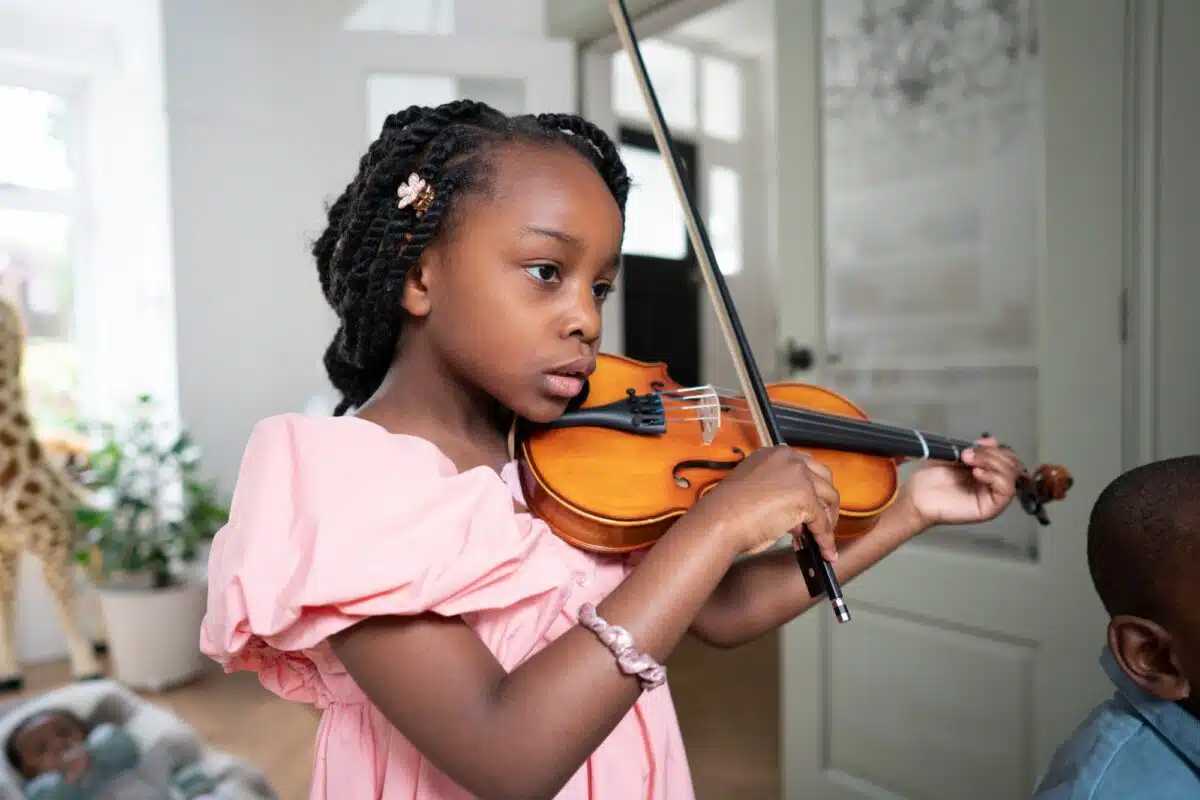
Stringed instruments like violin and guitar might not be instruments that you would consider for young children, but the early start for violin can happen as soon as ages 3 to 4, and 6 to 7 for guitar.
For violin, the style often used for young children is called the Suzuki Method, which teaches music through listening and imitation, much like learning a native language. If you don’t feel your child is ready to start that young, the ages of 5 to 7 is often considered the sweet spot for the violin because of a child’s attention span, ability to sit still and their fine motor skills.
Guitar requires finger strength, coordination and a decent attention span. Kids ages 6 to 7 are usually ready for basic, fun-focused, shorter lessons on a smaller ¼ or ¾ scale guitar. It is also recommended that the guitar have nylon strings that won’t bother your child’s fingertips. The sweet spot for guitar lessons is ages 8 to 12 because of the child’s hand size, cognitive focus, finger strength and fine motor control.
Percussion
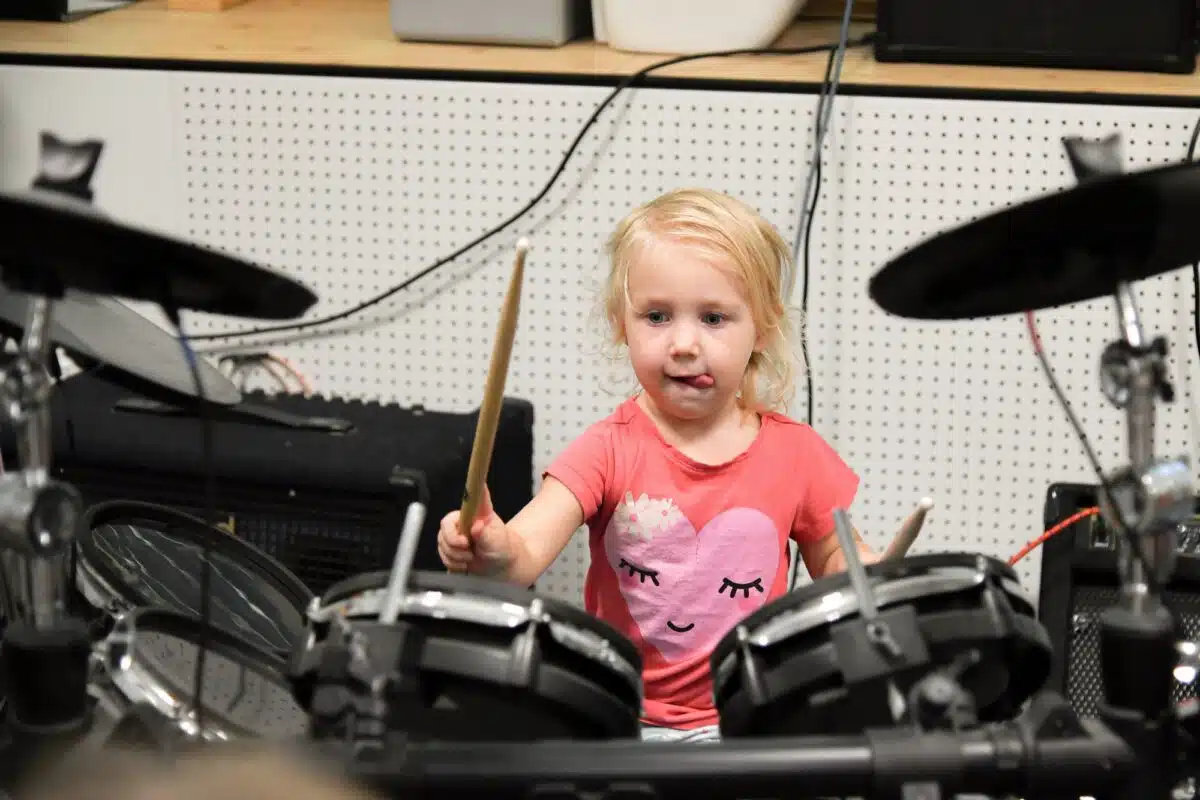
The drums may cause some anxiety when you first think of them, but before you shut them out completely, it’s good to know that they are great for early music exploration. From the ages of 2 to 4, children can start experimenting with hand drums, shakers or a single practice pad. This stage is focused on learning beats, having fun and moving to the music. When a child is 4 or 5, they can start introductory single drum lessons, as long as they have good physical coordination. The optimal start is ages 6 to 8 because at this time, they are able to count, reach the pedals and cymbals, and move their limbs with more coordination.
Brass
Brass instruments, such as the trumpet, trombone and French horn, are another wonderful way for children to explore music. These instruments use buzzing lips to create sound, which requires a different set of skills than playing the piano or strings. Younger children can begin exploring brass instruments through music classes that focus on rhythm, listening and making sounds, while traditional brass lessons are often a better fit around ages 8 to 10.
Voice
One instrument that you may not have thought of is your child’s voice. Does your child love belting out their favorite song? Consider placing your child into a music class, or once their attention span is long enough, into vocal lessons.
A great place that introduces children to vocals and more is Kindermusik. Kindermusik is a research-based early childhood music and movement program that is designed specifically for children from the ages of birth to 7 years. Kindermusik combines singing, dancing, instruments and storytelling with classes suited for a child’s developmental stage. Another great thing about Kindermusik is that the parent participates with the child, which is good not only for the parent/child relationship, but also for the parent to see how to incorporate music more into their child’s life at home.
The good news is that if you choose an instrument for your child and it’s not working, they can try something else. The hope is that, by introducing your child to the joy of music-making at a young age, they will have found something that will bring them (and others) happiness throughout their entire life.
Related Article: A Class for Every Child