Children are born curious. They ask endless questions, test boundaries and explore the world through play. Hands-on STEM experiences tap into that curiosity, transforming everyday questions into opportunities for discovery.
Rather than simply hearing about scientific concepts, many children learn best when they can actively engage with them. Building, experimenting, observing and problem-solving help young learners connect abstract ideas to the world around them. Whether they’re testing what makes an object move, exploring patterns or figuring out how to construct something that won’t fall over, children are learning to think critically while having fun.

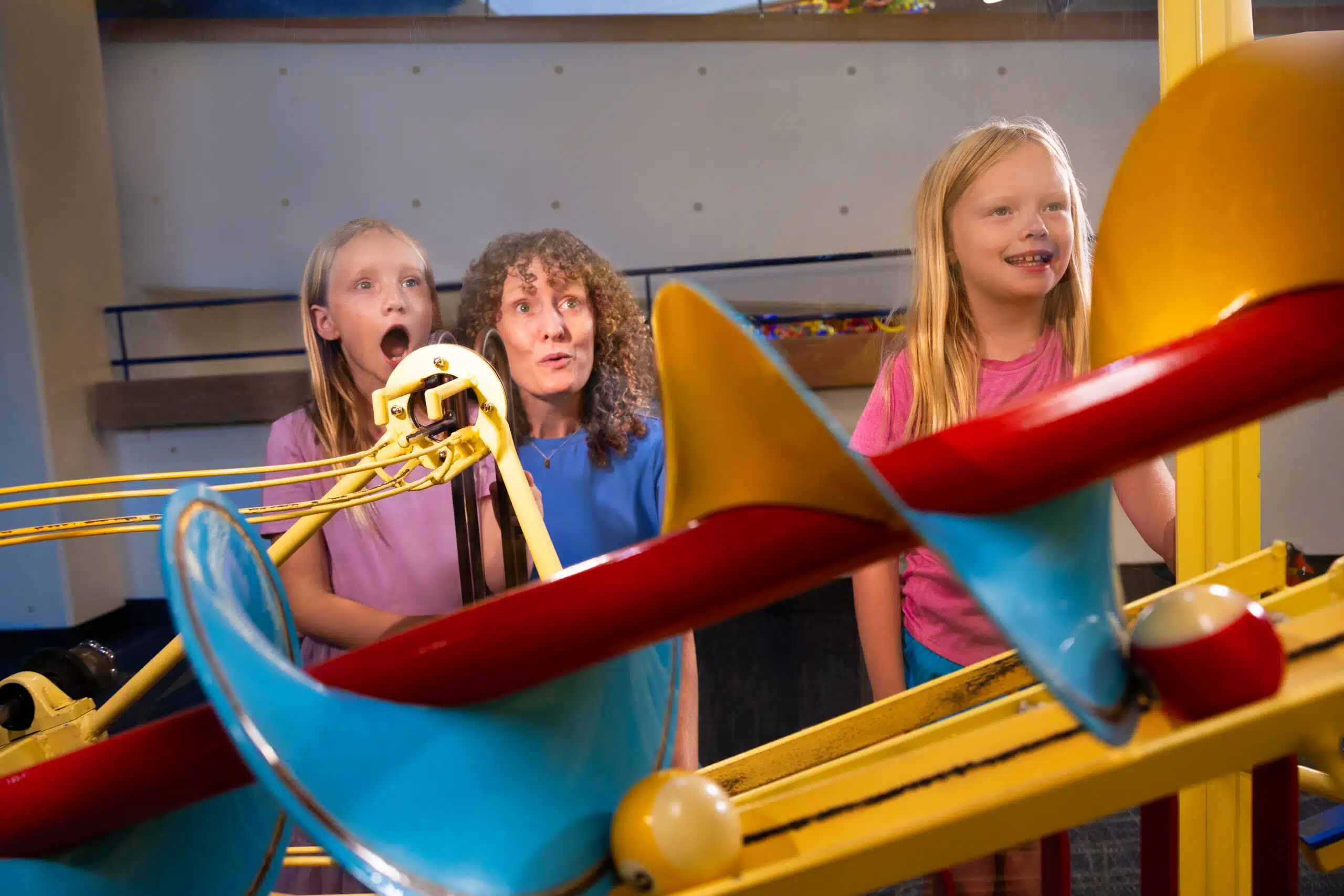
When you visit The Children’s Museum of Indianapolis with your child, you’re giving them opportunities to explore the fundamentals of STEM. You probably already know that the museum has science-themed exhibits like ScienceWorks, DinosphereⓇ, Beyond Spaceship Earth, and PlayscapeⓇ (for children age 5 and under) that provide opportunities for young learners to build, climb, jump, touch and dig into scientific exploration. But it doesn’t stop with those exhibits. From the bangs and thuds of Rube Goldberg-inspired Ball Machine to the clicks, clacks and clunks of the brand-new play stations in the reimagined All Aboard! train-themed exhibit that reopens Saturday, Sept. 26, the museum has exploration opportunities at every turn.
Laying the Groundwork
Hands-on STEM activities also encourage children to take risks and learn from mistakes. When a solution doesn’t work the first time, kids have the chance to adjust their approach and try again. This process helps build persistence, confidence and resilience, important skills that extend far beyond science and math.
These experiences lay the groundwork for lifelong learning. STEM is not just about memorizing facts or preparing for future careers. At its core, STEM learning teaches children how to ask questions, investigate possibilities and develop creative solutions. It nurtures a mindset of exploration and discovery.

In addition to the exhibits, The Children’s Museum offers a variety of guided hands-on STEM opportunities throughout the day. The staff-led daily activities in the STEMLab offer your child the chance to use modern scientific equipment and methods to discover something new. In a similar vein, Discovery Lab was created for children age 5 and under to explore rocks, plants, fossils, and other items from the natural world and use science tools designed just for them.
Thanks to the philanthropic support of the Eli Lilly Company Foundation, the museum also features a female STEM professional each year, showcasing successful women in STEM as positive role models. Throughout 2026, Visiting Scientist Dr. Ann Taylor, professor of chemistry and biochemistry at Wabash College, guides young scientists through an experiment that reveals how plants defend themselves.
You can find out more information about Dr. Taylor’s workshop and all of the other STEM-related opportunities at The Children’s Museum by visiting childrensmuseum.org/science.
Curiosity That Lasts a Lifetime
When children are given opportunities to engage with STEM in meaningful, hands-on ways, they begin to see learning as something exciting rather than something they have to do. That sense of wonder can spark interests that grow over time, helping children become confident learners who remain curious about the world long after the activity ends.